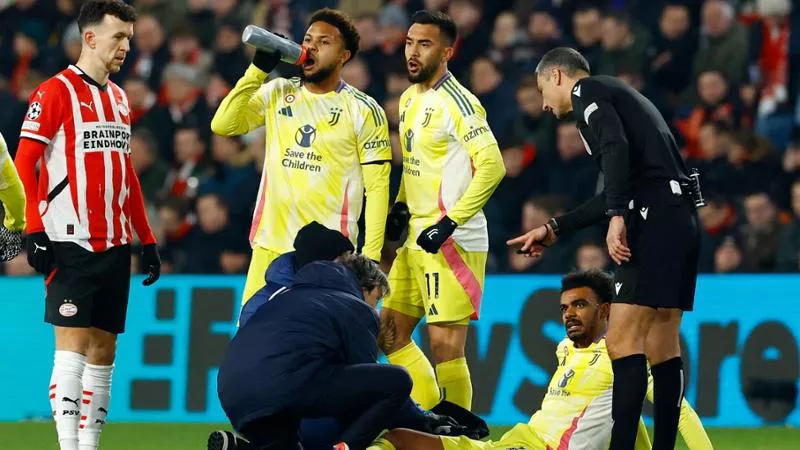
This episode begins the in-depth analysis with Fabrizio Tencone, sports physician and director of Isokinetic in Turin.
Muscle injuries are a veritable epidemic in soccer, the sport in which they occur most frequently. On average, a team of 25 players experiences between 15 and 20 such injuries per season. Rugby, basketball, and track and field follow in terms of incidence.
Muscle injuries are divided into two main categories. Functional injuries are the least serious, known as contractures or strains, and do not cause macroscopic damage to the fibers. The pain is mild, and the athlete is often able to finish the game. Structural injuries are true injuries (strains or tears) that require prolonged recovery. In these cases, the player experiences severe, sudden, and well-localized pain, requiring replacement and causing pain even when walking.
The muscles most affected are the so-called flexors, the posterior thigh muscles (hamstrings), typically during high-speed runs. Other common injuries include calf injuries during acceleration, quadriceps injuries during kicking, and adductor injuries from overstretching. Muscle injuries in soccer occur spontaneously in 83% of cases (without contact with an opponent).
Diagnosis requires a thorough medical examination and tools such as ultrasound (performed after at least 48 hours) or MRI in more complex cases. Treatment is almost always conservative (non-surgical) and follows rigorous phases.
Acute Phase (first 2-3 days)
The Police protocol (Protection, Optimal Loading, Ice, Compression, Elevation) is applied. Deep tissue massage is not recommended during this phase.
Intermediate Rehabilitation
Once the pain while walking subsides, water exercises are started to reduce the load, along with flexibility and initial muscle strengthening in the gym.
Return to the Field: final phase with game simulation and GPS monitoring to verify speed and acceleration.
A crucial step is regaining symmetrical strength between the limbs, which can be measured with an isokinetic dynamometer. Without symmetrical strength, there can be no recovery, regardless of the ultrasound results.
The greatest risk is recurrence, mainly caused by the rush to return to play.
Recovery times
Vary depending on the sport, the role, and the athlete’s medical history. The correct philosophy for both professional and amateur athletes is to avoid shortcuts: only a complete and measurable recovery guarantees a safe return